Journal
Can you make a nose smaller without changing the profile?
A nose can look smaller from the front while the side profile stays the same. Width, length and projection explained on one face.
 Hannah Bellamy
Often, yes. Width and projection are separate. A nose can get narrower from the front while the side line stays where it is.
It depends on what is making the nose look big. If it is width, the profile can stay. If it is projection, the profile has to move.
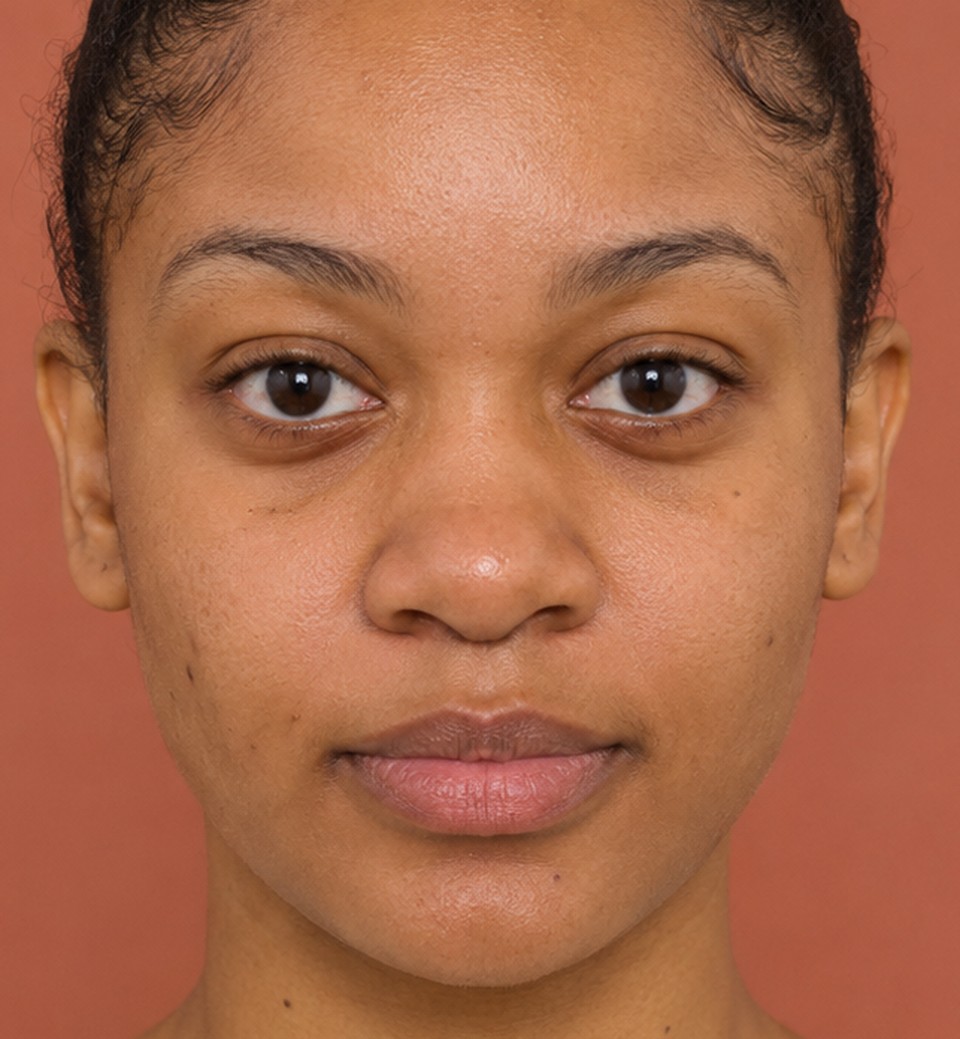
Here is our model, the baseline for this post.
Three words to know
A nose has three main sizes. Surgeons treat them separately.
- Width: how wide the nose is from the front, at the nostrils and at the tip.
- Length: how far it runs from the bridge to the tip.
- Projection: how far the tip stands out from the face when you look from the side.
“Smaller” can mean any of these. Only projection and length change the side outline in a major way.
Width changes the front. That is why it is the safest place to start if you love your profile.
Width: the front view
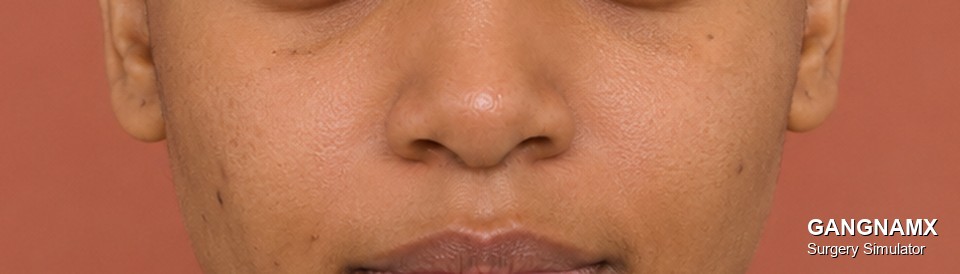
Our model has a softly rounded tip and nostrils that sit a little wide. From the front, the tip is the broadest part of the nose.
Narrowing the tip and bringing the nostril edges in a little makes the whole nose read as smaller. The bridge stays where it is.
Below, the simulator narrows the tip and pulls the nostril wings in. The change is easy to see, and it keeps the length and the character of the face.
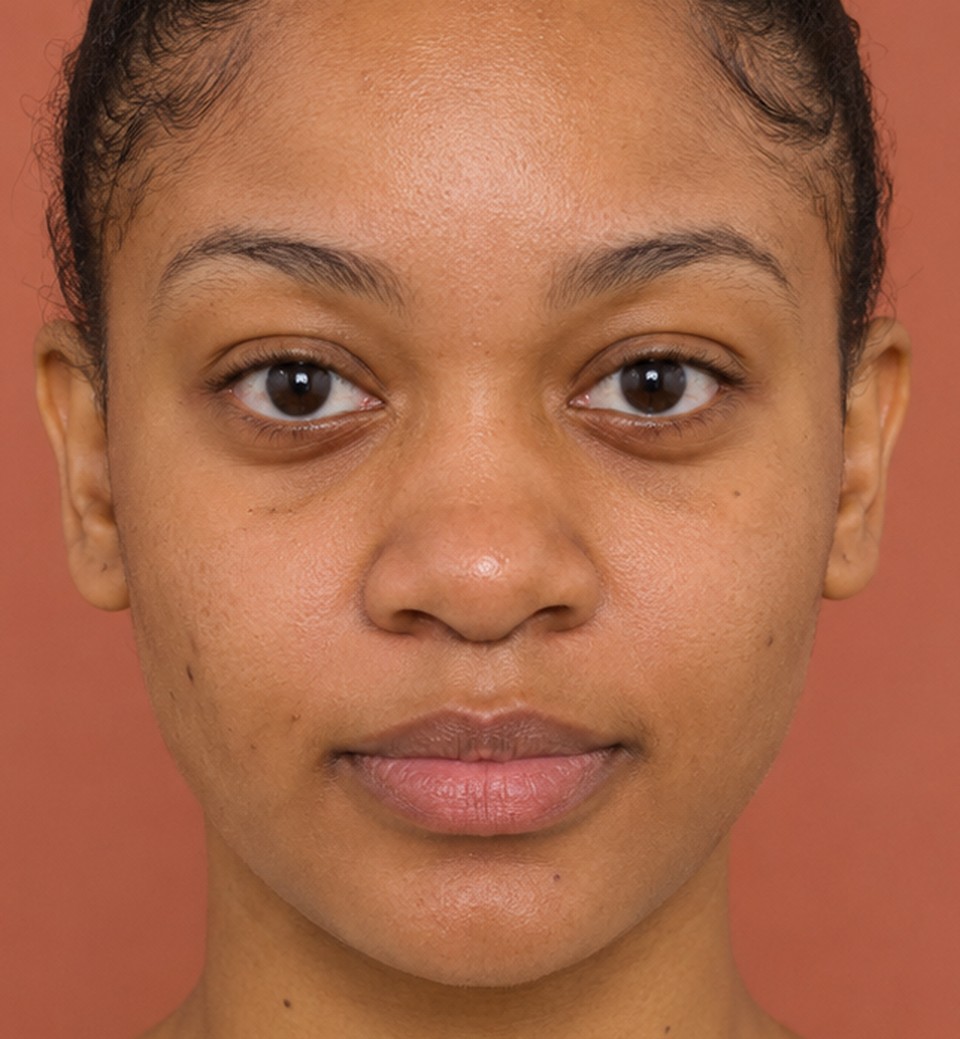
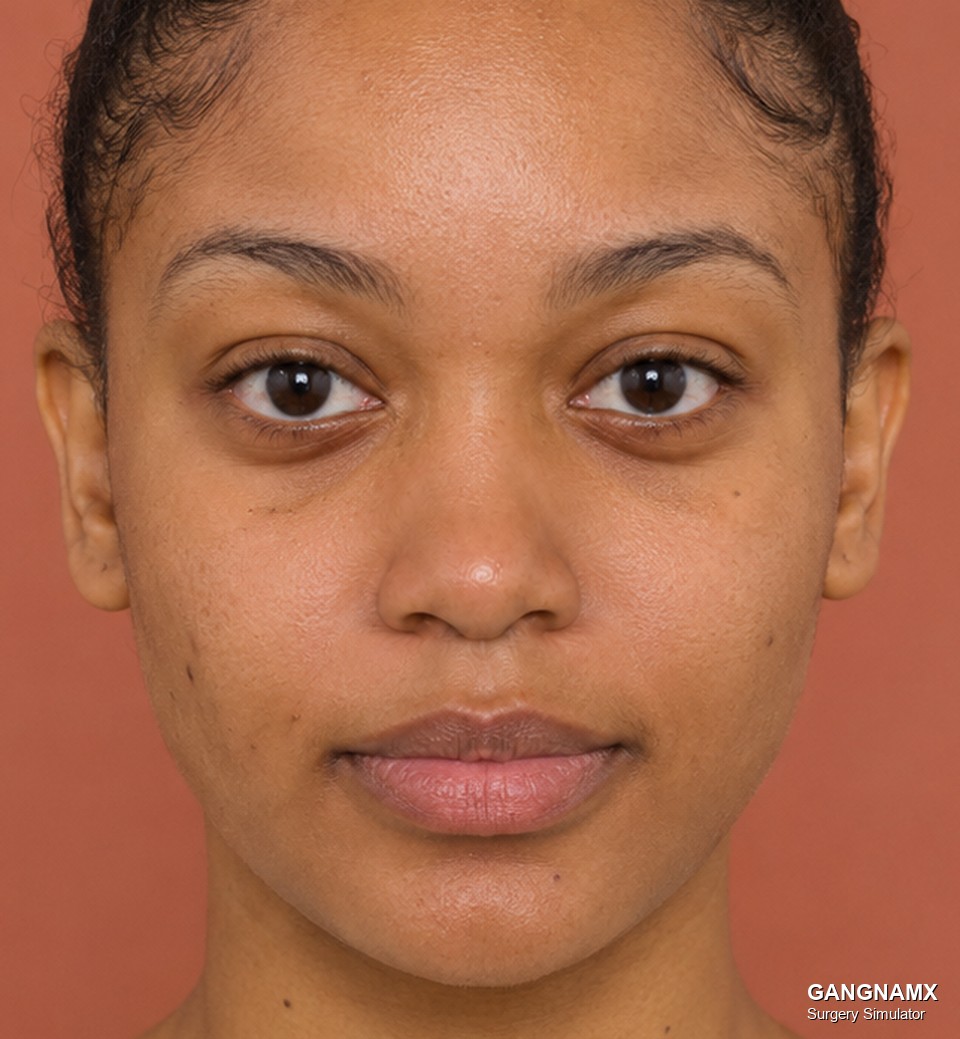
Look at the width of the nose against the width of the eye. The tip and the wings are visibly narrower, and the nose still belongs to her. It is a refinement, not a replacement.
A closer look at the tip
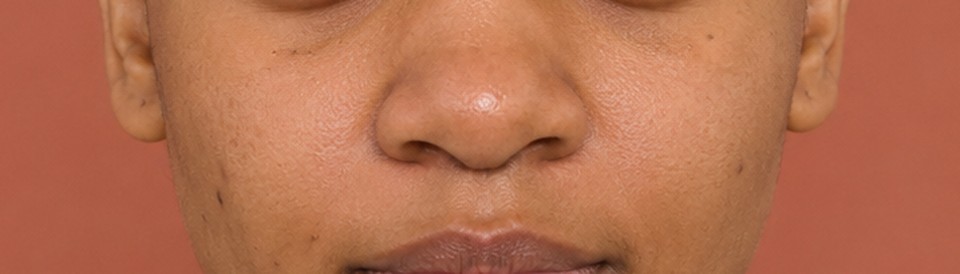
A rounded tip is not a flaw. It is a feature of many faces. But a tip that is broad compared with the bridge can make the whole nose seem heavy.
Refinement works on the cartilage under the skin. It can bring the two sides of the tip closer together.
The skin matters. Thicker skin hides small cartilage changes, so the visible result is softer. Thinner skin shows more.
This is why a surgeon feels the skin before promising a shape.
The side check
Now the key question. Did the profile change?
Side by side, the outline from brow to tip should stay nearly the same, even though the front view changed clearly. The tip does not move forward or back. The nose is not shorter.
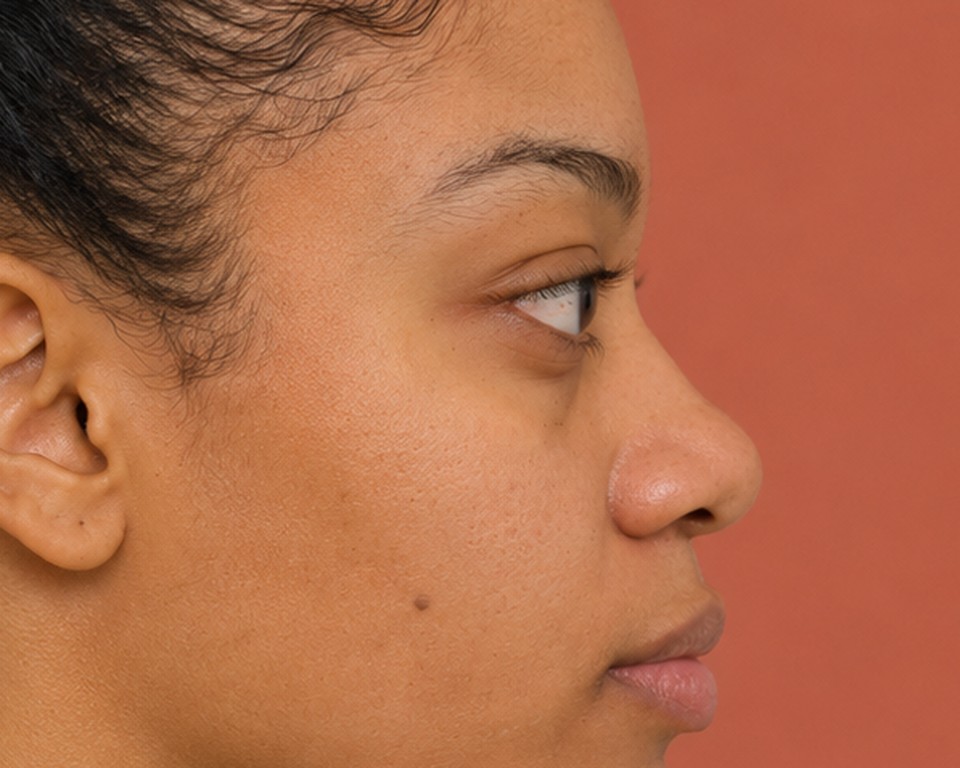
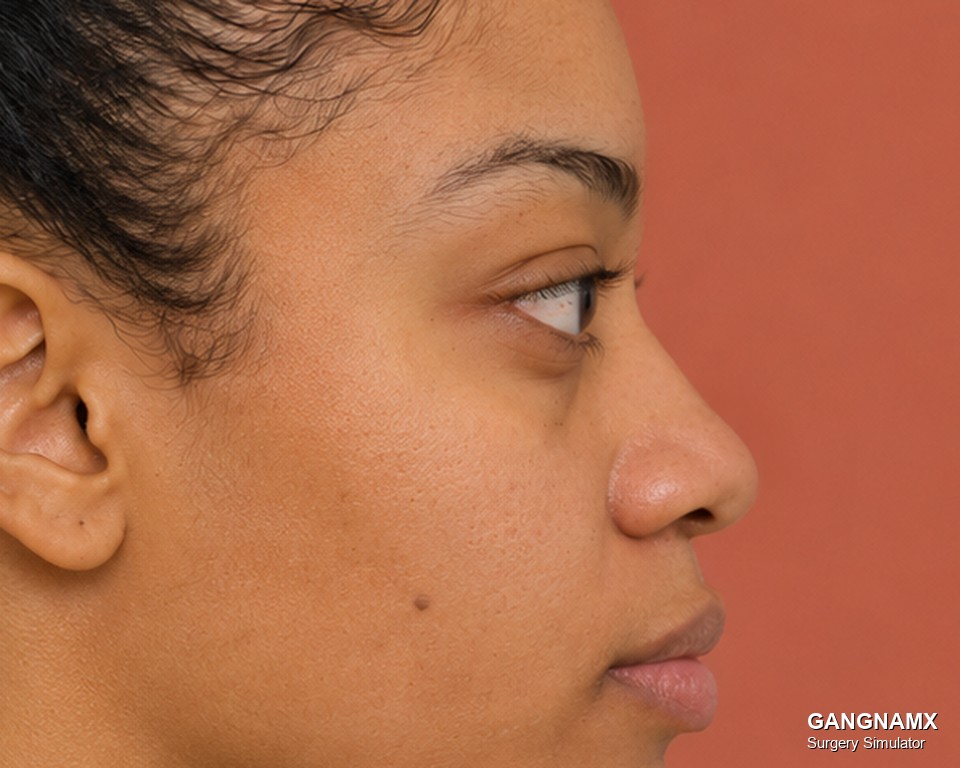
Trace the line from the bridge to the tip with your eye. If you can draw it on one photo and lay it over the other, the profile has been kept.
You can do the same with your own side photo and a transparent sheet.
What has limits
Some goals do not fit together. Here are the common ones.
- A much smaller nose and the same profile. If the nose projects a lot, making it smaller means moving the tip back.
- A much narrower base on thick skin. The skin cannot shrink as much as the structure.
- A shorter nose and the same angle. Length and rotation are linked.
Cartilage and bone can be reshaped. Skin can only follow so far.
A realistic aim is a nose that is a little smaller where it is widest, and clearly still yours.
What to bring to a consultation
Say it in one line: “I want it narrower, but keep my profile.” A good surgeon will ask whether you also want the tip to rotate or the bridge to change.
Take front and 90 degree side photos. Draw one line on each where you want the change.
Ask which of the three measures the surgeon plans to change, and which they plan to leave alone.
Nobody can promise a result. A clinician can describe what is realistic for your skin and structure.
Measuring on your own photos
A rough check takes a few minutes. Use a straight front photo and a true 90 degree side photo.
From the front, compare the width of the nose at the nostrils with the distance between the inner corners of the eyes. In many faces these two are close. A nose much wider than that gap can look broad.
From the side, look at how far the tip stands out from the upper lip. That is projection. Notice the angle between the nose and the upper lip too.
Then ask yourself which one bothers you.
- “It looks wide in selfies.” Likely width.
- “It sticks out in profile.” Projection.
- “It looks long.” Length, often tied to tip angle.
Be honest, and keep it to one item at a time. People who ask for “smaller” often mean width, and are happy that the side view stays.
Cameras add confusion. A close front camera widens the nose in the photo, so check at arm length before you decide anything.
Our model is a good reminder that a rounded tip and a pleasant profile can live on the same face. One does not have to move for the other to change.
Skin type also matters for the plan. Thick, oily skin tends to hold its shape and hides fine cartilage work. Thin skin shows every edge. Neither is better. They simply behave differently, so the same plan can look different on two faces.
Age plays a part as well. Tips tend to soften and drop slowly over the years, so a surgeon may leave a little extra support in the plan.
One more point: expectations. “Smaller” is a feeling about proportion, not a number. Two millimetres at the nostril edge can change how the whole centre of the face reads. Because of that, small steps are usually the wise ones.
Quick recap
Width, length and projection are three different dials. Narrowing the tip and the base changes the front without changing the side line.
If your wish is “smaller, but still me”, start by checking the width on a front photo. A clinician can tell you whether that is enough.
You can preview it on your own face first, front and side, before you talk to anyone.
Simulation images by GangnamX.
 Plastic Surgery SimulatorYour face. Your after.Try it on you